
Black Cherry
Prunus serotina
Introduction
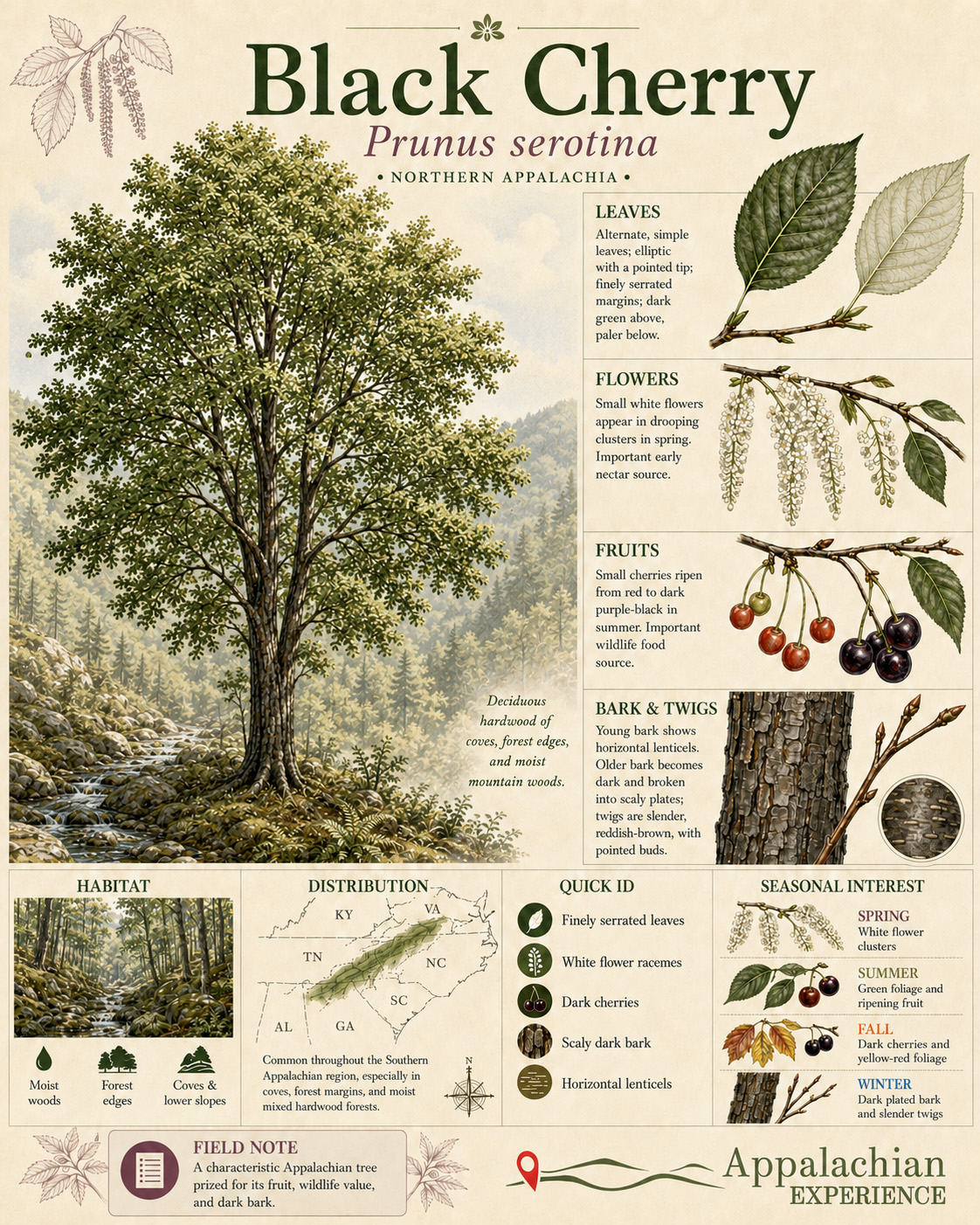
Black cherry has special strength in parts of Northern Appalachia, especially the Allegheny hardwood forests. It is a tree of flowers, fruit, dark bark, and valuable wood.
Quick Facts
Common Name
Scientific Name
Family
Plant Type
Typical Size
Flowers / Pollen Cones
Fruit / Seed /Seed Cones
Common Habitat
Caution
Black Cherry
Prunus serotina
Rosaceae, the rose family
Deciduous hardwood tree
Often 50 to 80 feet tall, taller in the Allegheny hardwood region
White flower clusters in spring
Dark cherries in hanging clusters
Allegheny hardwood forests, old fields, roadsides, slopes, and openings
Wilted leaves can poison livestock; pits and foliage contain toxic compounds
Where it Grows
In Northern Appalachia, black cherry grows in mixed hardwood forests, old fields, openings, and roadsides. In northwestern Pennsylvania and nearby regions, it can be a major timber tree.
How to Identify It
Look for white flower racemes, dark cherries, alternate toothed leaves, and mature bark that breaks into dark scaly plates. Twigs may smell like bitter almond when scratched.
Importance to the Appalchia Ecosystem
The fruit feeds birds and mammals, which spread the seeds. The tree also responds to openings and helps shape young forest after disturbance.
More trees...
Northern Appalachia
Southern Appalachia
Human Uses
Black cherry wood is valued for furniture, cabinets, veneer, paneling, and fine interior work. The fruit has limited culinary use, but the plant requires caution.
Interesting Facts
It is one of the valuable hardwoods of the Allegheny Plateau.
Birds are major seed dispersers.
Mature bark is a strong winter identification feature.
Look-Alikes
Black cherry can be confused with chokecherry and pin cherry. Mature bark, hanging clusters, and tree size help separate it.
Cautions and Common Problems
Wilted leaves can poison livestock. Black knot, tent caterpillars, borers, and leaf diseases can occur.
Seasonal Interest
Spring brings flower clusters. Summer and fall bring fruit. Fall color is yellow to orange. Winter bark is dark and scaly.
In the Appalachian Landscape
Black cherry adds fruit, timber history, and edge life to the northern mountains. It is both a forest tree and a tree of openings.
Sources and Further Reading
- U.S. Forest Service Silvics of North America, Black Cherry. https://research.fs.usda.gov/silvics/black-cherry
Last reviewed: 2026-10-07
Northern Appalachian Trees
Southern Appalachian Trees
Start your journey today at Appalachian Experience—where adventure meets tradition.
Get the Appalachian Experience Newsletter
Unlock the wonders of the Appalachian Mountains! Subscribe to our newsletter for the latest updates on attractions, events, and hidden gems. Follow us on social media to stay inspired by the beauty and adventure that awaits. Join our community today!