
Virginia Pine
Pinus virginiana
Introduction
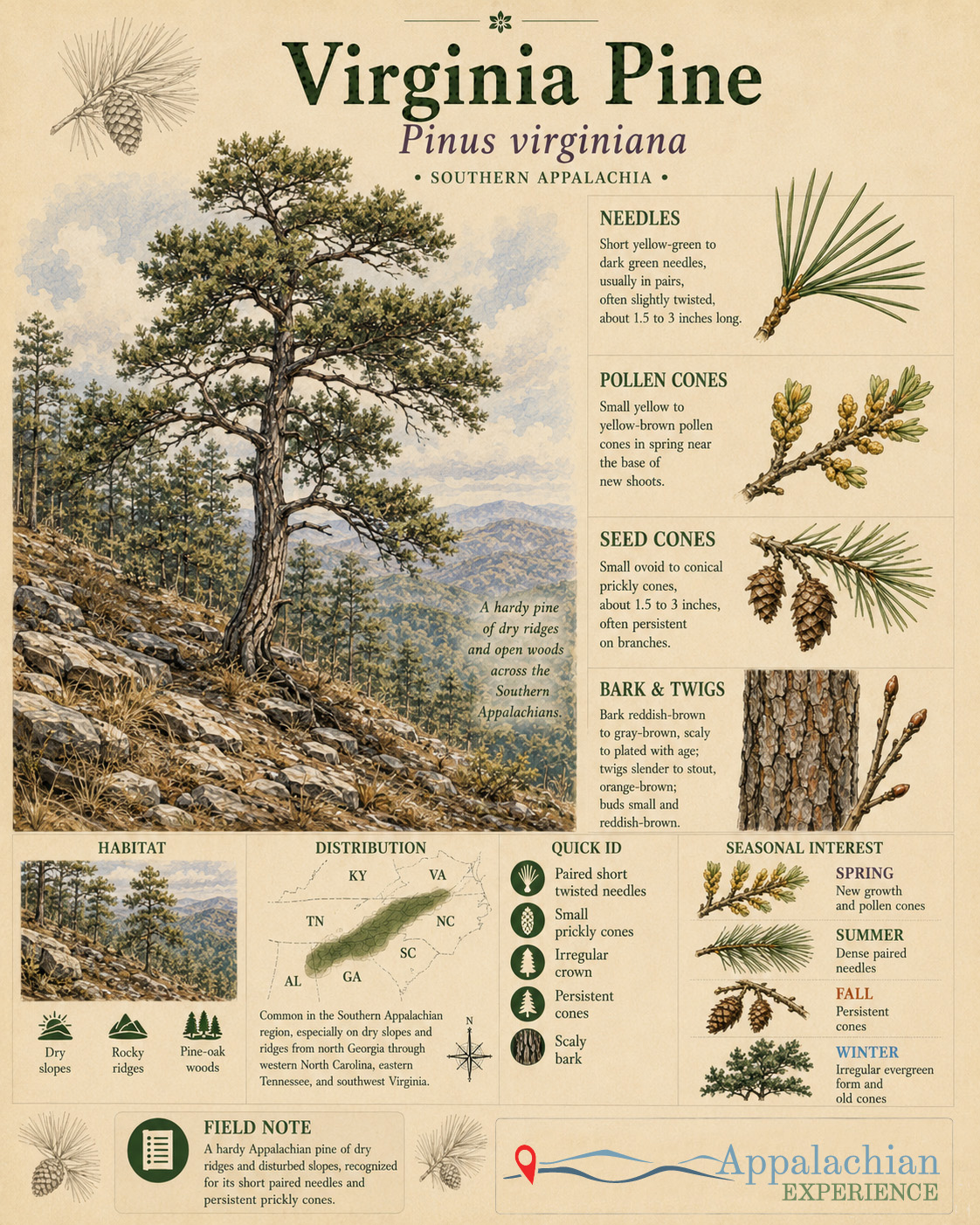
Virginia pine is the scrappy pine of many Southern Appalachian slopes and old fields. It is not polished. The crown can look irregular, the needles twist, and old cones cling to branches for years. That roughness is part of its identity.
Quick Facts
Common Name
Scientific Name
Family
Plant Type
Typical Size
Flowers / Pollen Cones
Fruit / Seed /Seed Cones
Common Habitat
Caution
Virginia Pine
Pinus virginiana
Pinaceae, the pine family
Evergreen conifer
Often 30 to 70 feet tall
Spring pollen cones and seed cones
Small cones that may persist for years
Dry slopes, old fields, disturbed sites, eroded ground, rocky ridges, and pine-oak woods
Dead branches and old cones can be sharp; no major toxicity issue for people
Where it Grows
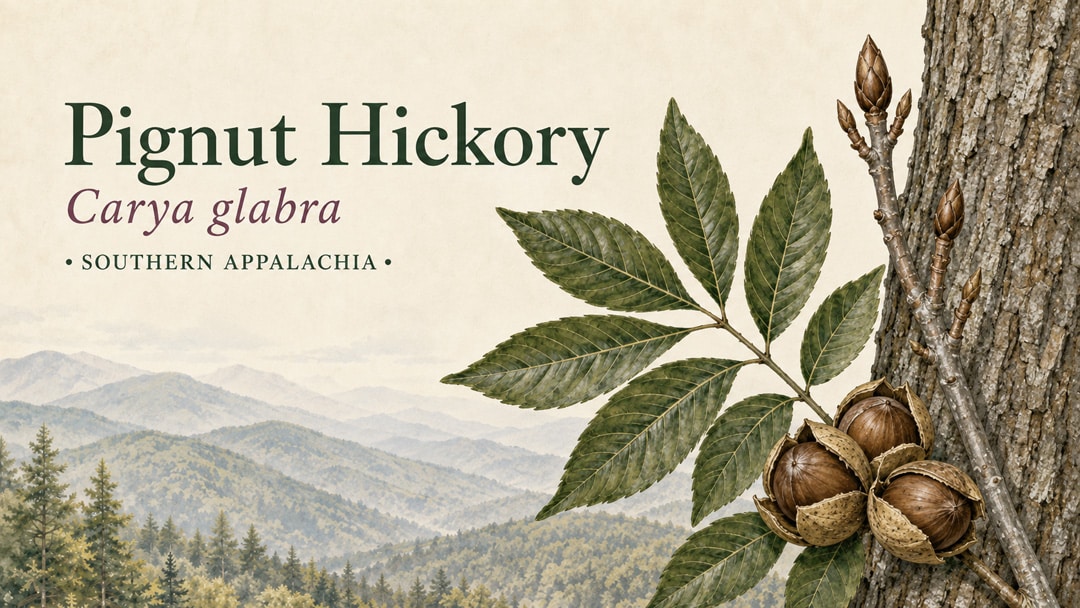
In Southern Appalachia, Virginia pine is common on dry, disturbed, rocky, and old-field sites, especially at lower to middle elevations. It often grows with chestnut oak, scarlet oak, sourwood, pignut hickory, and mountain laurel.
How to Identify It
Look for short twisted needles in bundles of two, small prickly cones, rough bark, and an irregular crown. It often has dead lower branches and a scruffy outline compared with white pine.
Importance to the Appalchia Ecosystem
Virginia pine colonizes worn-out fields, burned areas, cutover ground, and dry slopes. It provides cover, seeds, and early forest structure where slower hardwoods may later take over.
More trees...
Northern Appalachia
Southern Appalachia
Human Uses
The wood is used for pulpwood, lumber, fuel, and reforestation on difficult sites. It has also been used as a Christmas tree where form is suitable.
Interesting Facts
It was once dismissed by some foresters as scrub pine, but it has real ecological value.
Its cones can persist on branches for many years.
It is a pioneer tree on poor and disturbed sites.
Look-Alikes
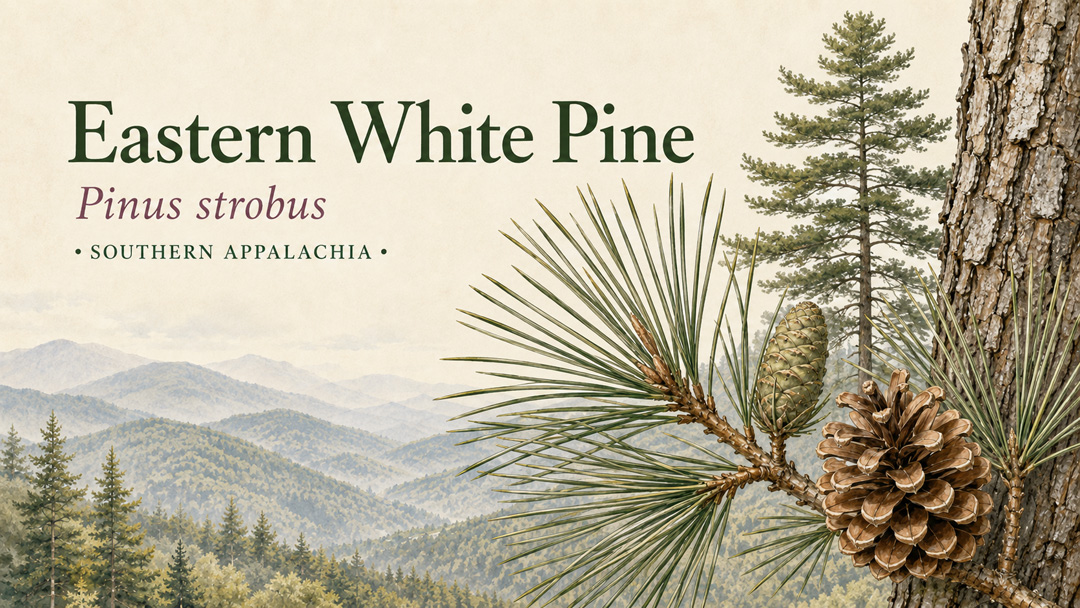
Virginia pine can be confused with pitch pine and shortleaf pine. Virginia pine usually has two short twisted needles per bundle and small cones. White pine has five soft needles per bundle.
Cautions and Common Problems
Southern pine beetle, Ips beetles, pitch canker, heart rot, ice, wind, and fire can affect stands. Older shallow-rooted trees may be prone to windthrow.
Seasonal Interest
Spring brings pollen and new candles. Summer shows twisted needles and small cones. Fall and winter leave the irregular evergreen form visible on ridges and fields.
In the Appalachian Landscape
Virginia pine belongs to hard-use ground. It is the pine of recovering slopes, abandoned fields, roadside banks, and dry ridges where the forest begins again without looking tidy.
Sources and Further Reading
- U.S. Forest Service Silvics of North America, Virginia Pine. https://research.fs.usda.gov/silvics/virginia-pine
Last reviewed: 2026-10-07
Northern Appalachian Trees
Southern Appalachian Trees
Start your journey today at Appalachian Experience—where adventure meets tradition.
Get the Appalachian Experience Newsletter
Unlock the wonders of the Appalachian Mountains! Subscribe to our newsletter for the latest updates on attractions, events, and hidden gems. Follow us on social media to stay inspired by the beauty and adventure that awaits. Join our community today!