
Shagbark Hickory
Carya ovata
Introduction
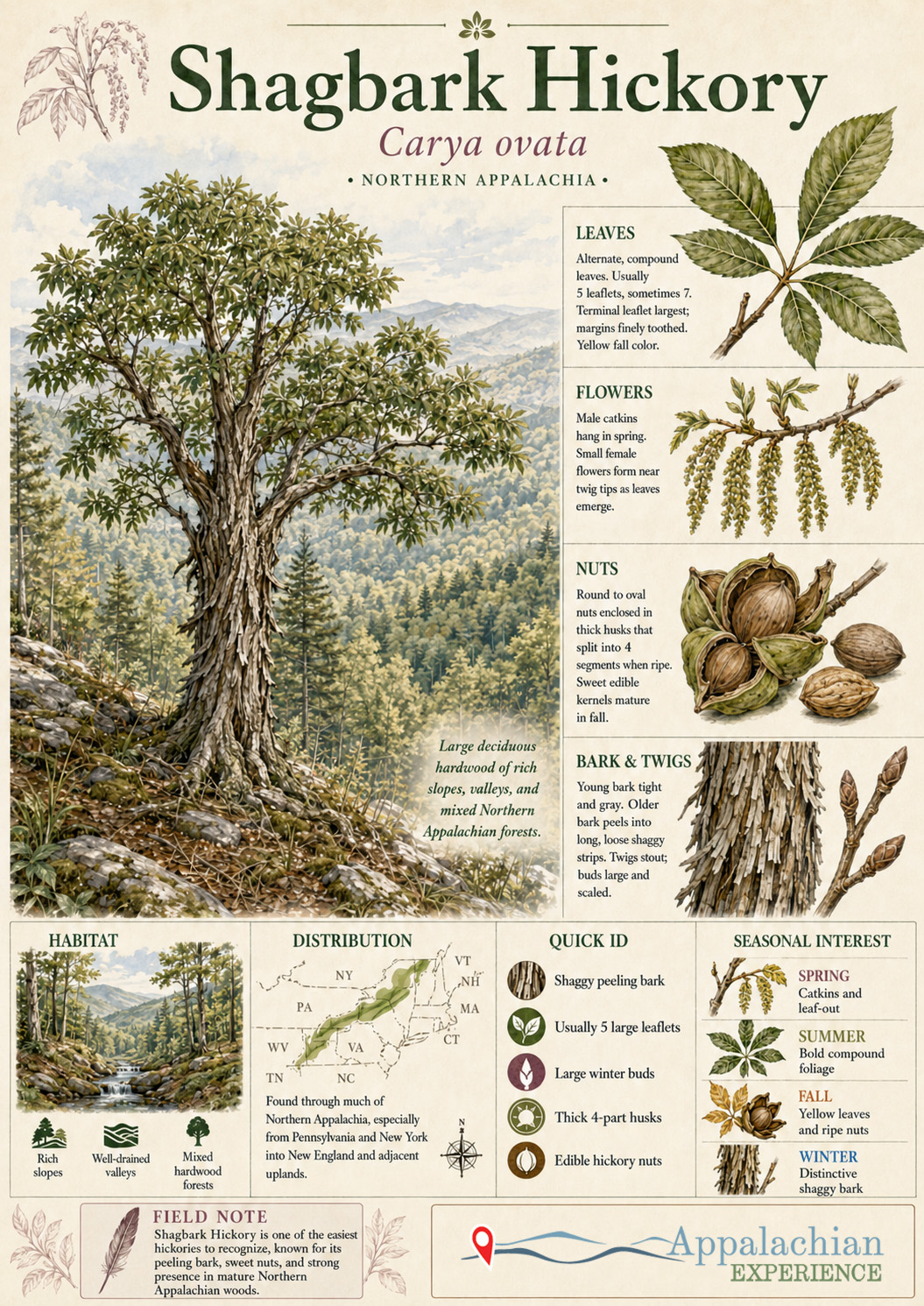
Shagbark hickory is the hickory almost everyone can learn by bark. Long loose strips pull away from the trunk, giving mature trees a shaggy outline. In Northern Appalachia, it is more common in warmer and richer sites than in the coldest uplands.
Quick Facts
Common Name
Scientific Name
Family
Plant Type
Typical Size
Flowers / Pollen Cones
Fruit / Seed /Seed Cones
Common Habitat
Caution
Shagbark Hickory
Carya ovata
Juglandaceae, the walnut family
Deciduous hardwood tree
Often 60 to 90 feet tall
Spring catkins
Thick-husked edible nuts
Rich uplands, slopes, valleys, and mixed hardwood forests
Falling nuts can be a minor hazard; no major public safety caution
Where it Grows
In Northern Appalachia, shagbark hickory grows on lower slopes, richer uplands, valleys, and mixed hardwood sites. It often grows with oaks, sugar maple, white ash, basswood, and black cherry.
How to Identify It
Look for compound leaves usually with five leaflets, large buds, thick-husked nuts, and bark peeling in long vertical strips. The shaggy bark is the main field mark on mature trees.
Importance to the Appalchia Ecosystem
The nuts feed squirrels, chipmunks, deer, bears, turkeys, and other wildlife. The loose bark plates can provide roosting spaces for bats and insects.
More trees...
Northern Appalachia
Southern Appalachia
Human Uses
The wood is hard, strong, and shock-resistant. It is used for tool handles, fuel, smoking wood, sporting goods, and specialty products. The nuts are edible and valued by wildlife and people.
Interesting Facts
The loose bark makes mature trees easy to identify.
Hickory wood burns hot and is prized for smoking meat.
The nuts are edible, though hard to process.
Look-Alikes
Shagbark hickory can be confused with shellbark hickory and pignut hickory. Shagbark has loose shaggy bark and usually five leaflets; pignut bark is tighter.
Cautions and Common Problems
Hickories are difficult to transplant because of deep roots. Nut pests, leaf diseases, and storm breakage can occur.
Seasonal Interest
Spring brings catkins. Summer shows compound leaves. Fall color is yellow-gold. Winter bark is the main feature.
In the Appalachian Landscape
Shagbark hickory is a tactile tree. The bark, nuts, and hard wood make it feel practical, old-fashioned, and connected to both wildlife and human use.
Sources and Further Reading
- U.S. Forest Service Silvics of North America, Shagbark Hickory. https://research.fs.usda.gov/silvics/shagbark-hickory
Last reviewed: 2026-10-07
Northern Appalachian Trees
Southern Appalachian Trees
Start your journey today at Appalachian Experience—where adventure meets tradition.
Get the Appalachian Experience Newsletter
Unlock the wonders of the Appalachian Mountains! Subscribe to our newsletter for the latest updates on attractions, events, and hidden gems. Follow us on social media to stay inspired by the beauty and adventure that awaits. Join our community today!