
Pitch Pine
Pinus rigida
Introduction
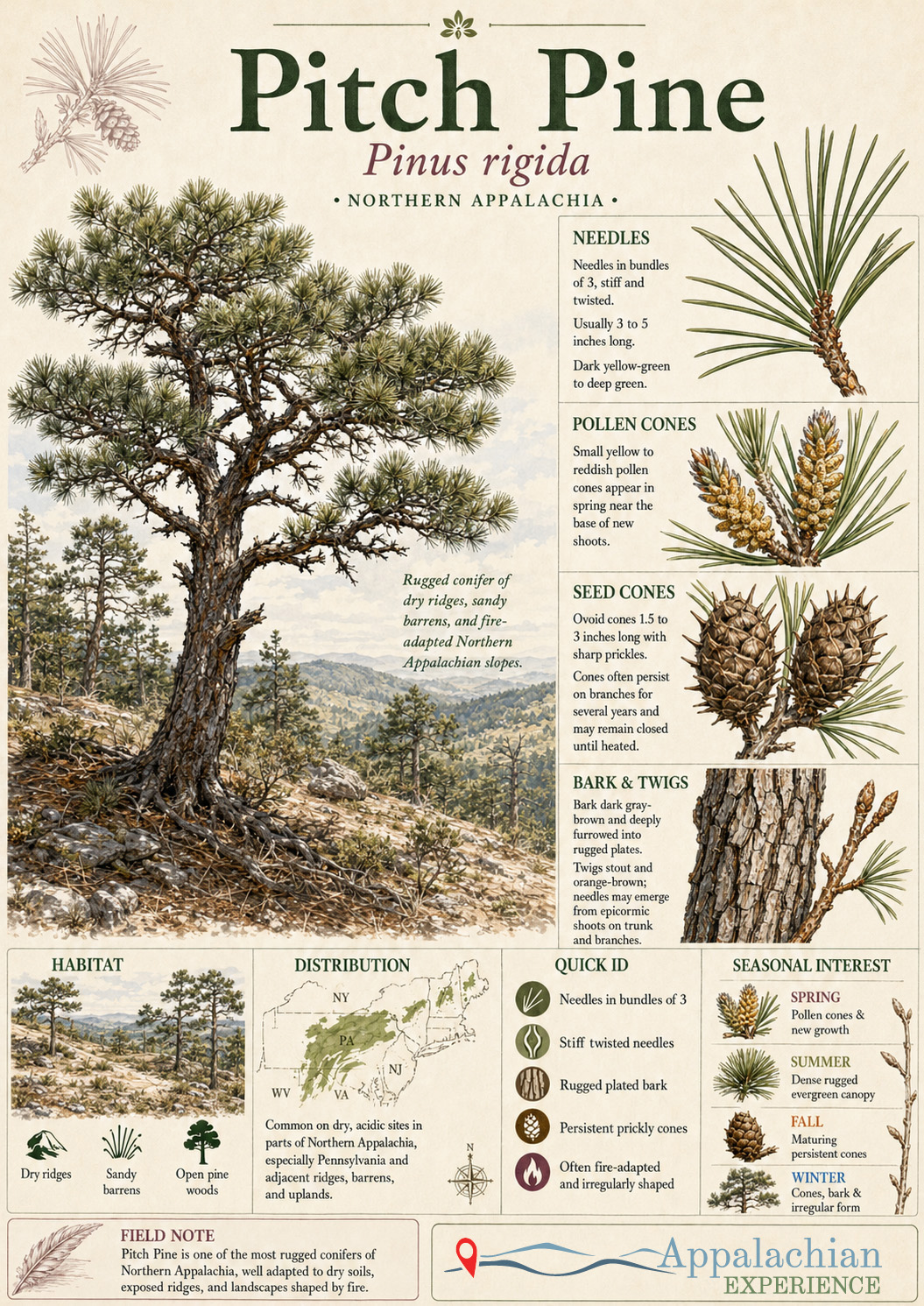
Pitch pine is a rugged pine of dry, difficult ground. In Northern Appalachia, it appears on rocky ridges, barrens, sandy soils, and fire-shaped sites. Its form is often irregular, with tufts of needles and cones along the branches.
Quick Facts
Common Name
Scientific Name
Family
Plant Type
Typical Size
Flowers / Pollen Cones
Fruit / Seed /Seed Cones
Common Habitat
Caution
Pitch Pine
Pinus rigida
Pinaceae, the pine family
Evergreen conifer
Often 30 to 70 feet tall
Spring pollen and seed cones
Woody cones, sometimes persistent
Dry ridges, rocky barrens, sandy soils, fire-influenced sites, and pine-oak woods
Resinous dead wood burns readily; old cones and branches can be sharp
Where it Grows
In Northern Appalachia, pitch pine grows on dry ridges, rocky slopes, sand plains, and pine-oak barrens. It often mixes with chestnut oak, scrub oak, black oak, white pine, and blueberries.
How to Identify It
Look for three stiff needles per bundle, rough bark, resinous wood, and cones that may persist. It can sprout from the trunk after injury, which is unusual among many pines.
Importance to the Appalchia Ecosystem
Pitch pine provides cover and seed in harsh sites and is closely tied to fire-influenced ecosystems. Its ability to sprout helps it persist after damage.
More trees...
Northern Appalachia
Southern Appalachia
Human Uses
The wood has been used for fuel, mine timbers, rough lumber, and resinous products. Its ecological role is often more important than its timber value.
Interesting Facts
It can sprout from the trunk after fire or injury.
It often grows where soils are poor, dry, or sandy.
Its cones may remain on branches for years.
Look-Alikes
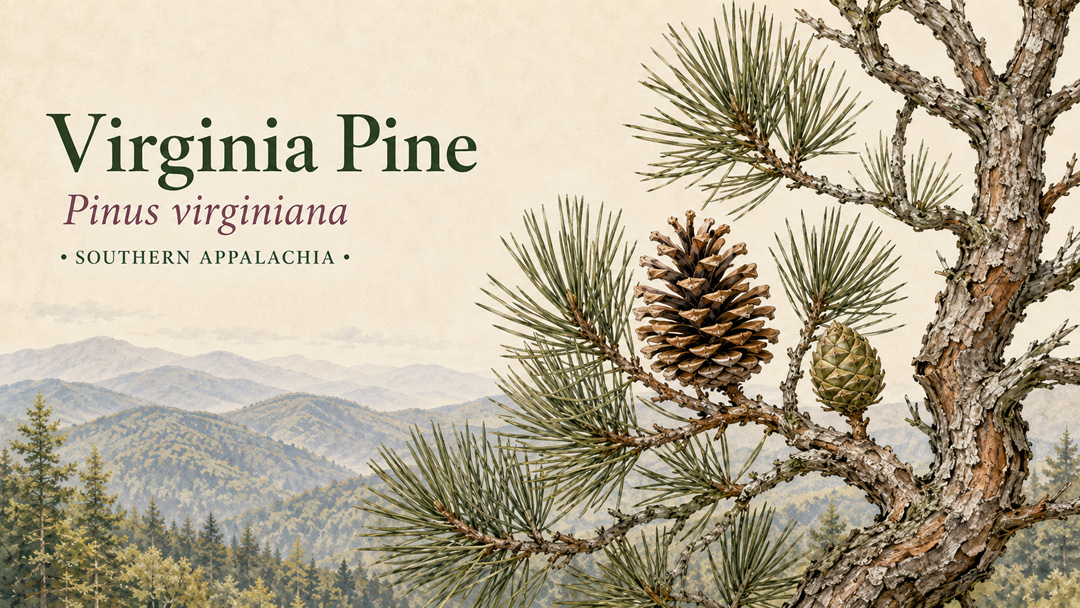
Pitch pine can be confused with Virginia pine and red pine. Pitch pine usually has three stiff needles per bundle. Virginia pine has two twisted needles. White pine has five soft needles.
Cautions and Common Problems
Fire suppression can change pitch pine communities. Southern pine beetle, drought, and competition from hardwoods can affect stands.
Seasonal Interest
Spring brings pollen and new candles. Summer shows stiff needles and cones. Fall and winter keep the rugged evergreen form visible.
In the Appalachian Landscape
Pitch pine belongs to exposed ground. It gives dry ridges and barrens a rough evergreen character shaped by fire, rock, and poor soil.
Sources and Further Reading
- U.S. Forest Service Silvics of North America, Pitch Pine. https://research.fs.usda.gov/silvics/pitch-pine
Last reviewed: 2026-10-07
Northern Appalachian Trees
Southern Appalachian Trees
Start your journey today at Appalachian Experience—where adventure meets tradition.
Get the Appalachian Experience Newsletter
Unlock the wonders of the Appalachian Mountains! Subscribe to our newsletter for the latest updates on attractions, events, and hidden gems. Follow us on social media to stay inspired by the beauty and adventure that awaits. Join our community today!