
Chestnut Oak
Quercus montana
Introduction
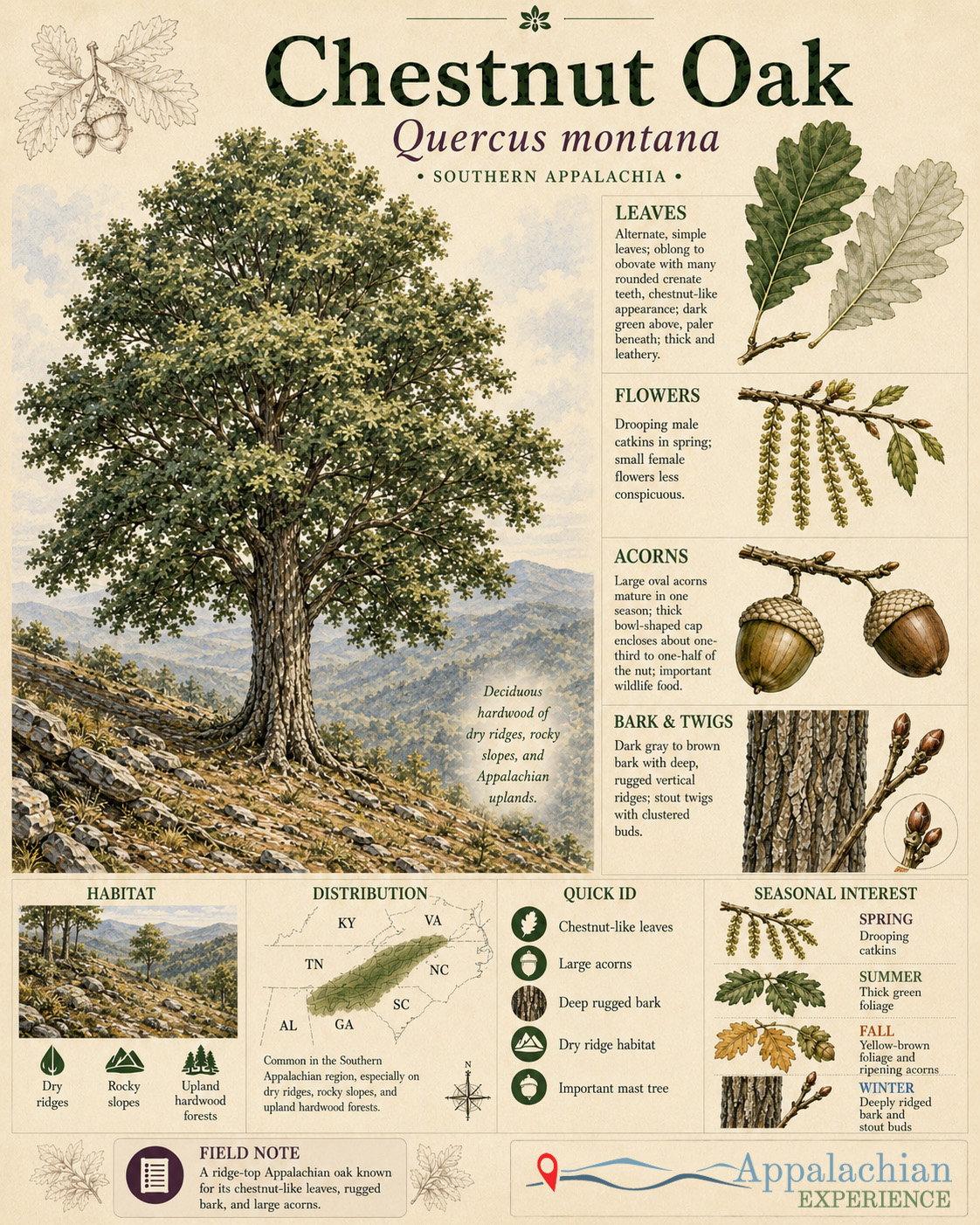
Chestnut oak is a ridge tree. In Southern Appalachia it often stands where soils are thin, rocks break the surface, and summer heat dries the slope. Its bark is thick, dark, and deeply ridged, and its leaves look more like chestnut leaves than the familiar lobed oak leaf.
Quick Facts
Common Name
Scientific Name
Family
Plant Type
Typical Size
Flowers / Pollen Cones
Fruit / Seed /Seed Cones
Common Habitat
Caution
Chestnut Oak
Quercus montana
Fagaceae, the beech family
Deciduous hardwood tree
Often 50 to 80 feet tall, shorter on exposed ridges
Spring catkins
Large acorns that mature in one season
Dry ridges, rocky slopes, upper mountain woods, and oak-hickory forests
Large acorns can be a footing hazard; no major public safety caution
Where it Grows
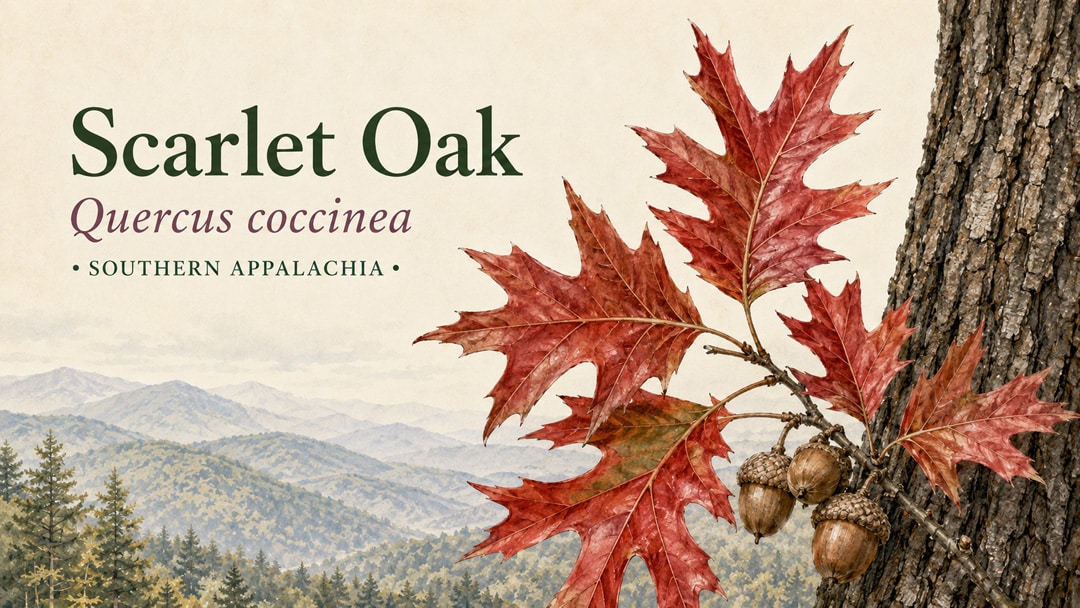
Chestnut oak is common on dry Appalachian ridges and upper slopes. It grows with scarlet oak, white oak, black oak, pignut hickory, sourwood, Virginia pine, and mountain laurel.
How to Identify It
Look for long, oblong leaves with rounded teeth, thick dark furrowed bark, and large acorns. The leaves are not deeply lobed. On rocky ridges, the bark often gives the tree away before the leaves do.
Importance to the Appalchia Ecosystem
Chestnut oak provides large acorns for wildlife and holds canopy space on harsh ridge sites where richer-site trees struggle. Its roots and leaf litter help stabilize dry slopes and rocky ground.
More trees...
Northern Appalachia
Southern Appalachia
Human Uses
The wood is similar to white oak and has been used for ties, fencing, fuel, flooring, and rough construction. The bark was historically valued for tannin.
Interesting Facts
Its leaves resemble those of the American chestnut, which helps explain the name.
It is one of the characteristic dry ridge oaks of Appalachia.
Its acorns are large and mature in one season.
Look-Alikes
Chestnut oak can be confused with swamp chestnut oak or chinquapin oak outside some mountain settings. In the Appalachians, focus on dry ridge habitat, thick bark, and large acorns. American chestnut has sharper teeth and different burs.
Cautions and Common Problems
Oak decline, drought, fire exclusion, and poor regeneration can affect stands. Heavy deer browse can reduce young oak recruitment.
Seasonal Interest
Spring brings catkins. Summer shows thick green leaves. Fall color is yellow-brown to russet. Winter identification relies on deeply ridged bark, buds, and acorns.
In the Appalachian Landscape
Chestnut oak belongs to the rocky spine of the mountains. It is one of the trees that makes a dry Appalachian ridge feel different from a cove or stream hollow.
Sources and Further Reading
- U.S. Forest Service Silvics of North America, Chestnut Oak. https://research.fs.usda.gov/silvics/chestnut-oak
Last reviewed: 2026-10-07
Northern Appalachian Trees
Southern Appalachian Trees
Start your journey today at Appalachian Experience—where adventure meets tradition.
Get the Appalachian Experience Newsletter
Unlock the wonders of the Appalachian Mountains! Subscribe to our newsletter for the latest updates on attractions, events, and hidden gems. Follow us on social media to stay inspired by the beauty and adventure that awaits. Join our community today!