
Pignut Hickory
Carya glabra
Introduction
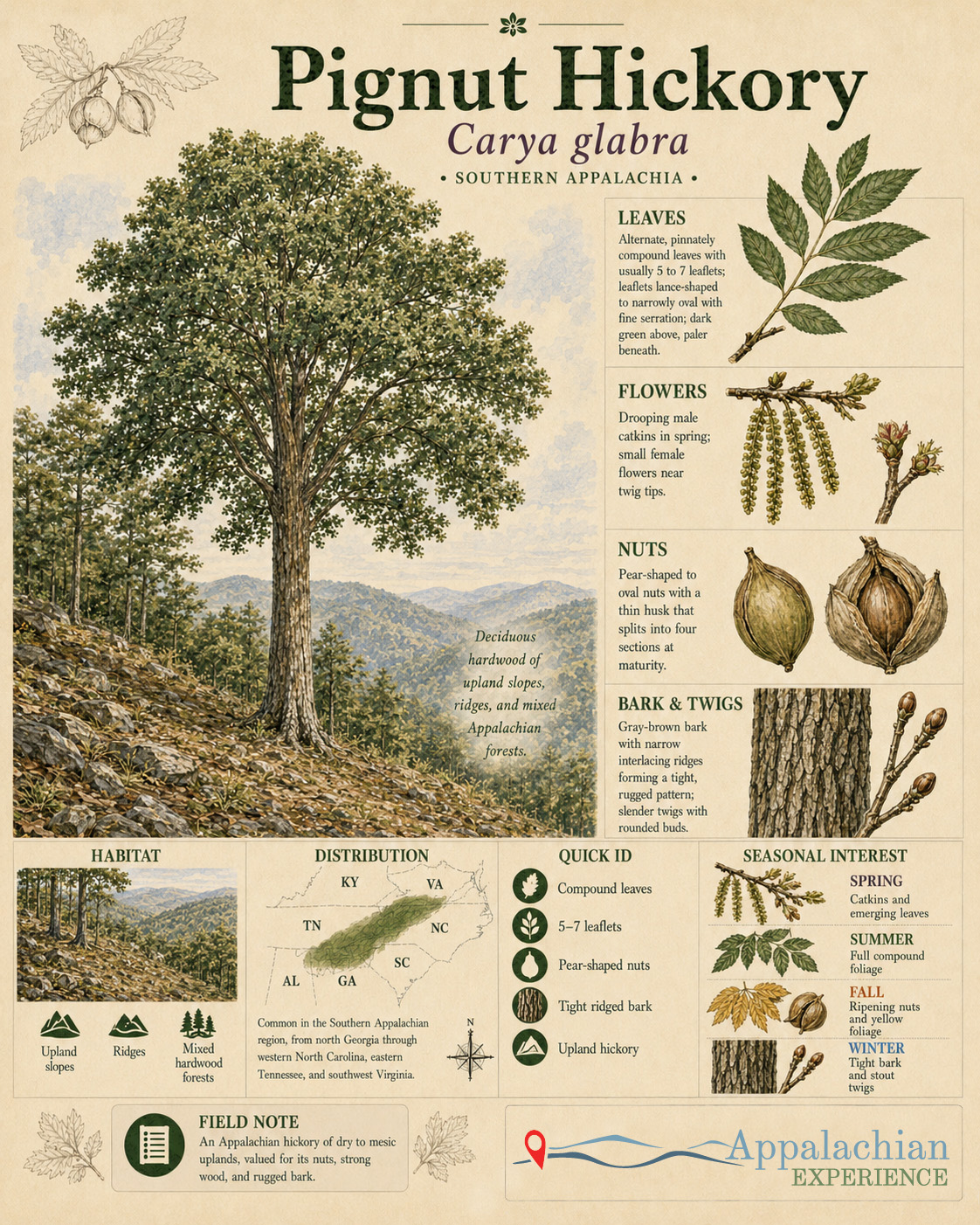
Pignut hickory is a common companion of Appalachian oaks. It does not always call attention to itself, but its compound leaves, hard nuts, and tough wood make it a steady part of upland forests. It is especially at home in oak-hickory woods on slopes and ridges.
Quick Facts
Common Name
Scientific Name
Family
Plant Type
Typical Size
Flowers / Pollen Cones
Fruit / Seed /Seed Cones
Common Habitat
Caution
Pignut Hickory
Carya glabra
Juglandaceae, the walnut family
Deciduous hardwood tree
Often 50 to 80 feet tall
Spring catkins
Pear-shaped nuts with thin husks
Oak-hickory forests, dry slopes, ridges, and mixed uplands
Falling nuts can be a minor footing or impact hazard; no major public safety caution
Where it Grows
In Southern Appalachia, pignut hickory grows in dry to moderately moist upland woods. It often occurs with white oak, chestnut oak, northern red oak, scarlet oak, sourwood, red maple, and Virginia pine.
How to Identify It
Look for compound leaves usually with five leaflets, tight gray bark, and pear-shaped nuts. The terminal leaflet is usually the largest. The nut husk is thinner than some other hickories and splits only partly.
Importance to the Appalchia Ecosystem
Pignut hickory nuts feed squirrels, chipmunks, black bears, deer, turkeys, and other wildlife. The tree also supports insects and contributes hard mast to oak-hickory forests.
More trees...
Northern Appalachia
Southern Appalachia
Human Uses
Hickory wood is hard, strong, and shock-resistant. It has been used for tool handles, fuel, smoking wood, sporting goods, and other products that need strength.
Interesting Facts
The name comes from the nut shape and its use by livestock and wildlife.
It is common, but not always abundant, in oak-hickory forests.
Hickory wood is known for strength and high heat value.
Look-Alikes
Pignut hickory can be confused with mockernut, shagbark, and bitternut hickory. Pignut often has five leaflets and tighter bark, while shagbark has loose peeling plates. Mockernut usually has larger, hairier leaves and thicker husks.
Cautions and Common Problems
Hickories can suffer from nut pests, leaf diseases, and drought stress. They are difficult to transplant because of deep roots.
Seasonal Interest
Spring brings catkins and new compound leaves. Summer shows a high canopy. Fall color is yellow to golden brown. Winter identification relies on bark, buds, and fallen nuts.
In the Appalachian Landscape
Pignut hickory belongs to the working rhythm of Appalachian uplands. Its nuts, hard wood, and partnership with oaks give it a practical presence in the forest.
Sources and Further Reading
- USDA Southern Research Station, Carya glabra. https://www.srs.fs.usda.gov/pubs/misc/ag_654/volume_2/carya/glabra.htm
- U.S. Forest Service FEIS, Carya glabra. https://www.fs.usda.gov/database/feis/plants/tree/cargla/all.html
Last reviewed: 2026-10-07
Northern Appalachian Trees
Southern Appalachian Trees
Start your journey today at Appalachian Experience—where adventure meets tradition.
Get the Appalachian Experience Newsletter
Unlock the wonders of the Appalachian Mountains! Subscribe to our newsletter for the latest updates on attractions, events, and hidden gems. Follow us on social media to stay inspired by the beauty and adventure that awaits. Join our community today!